
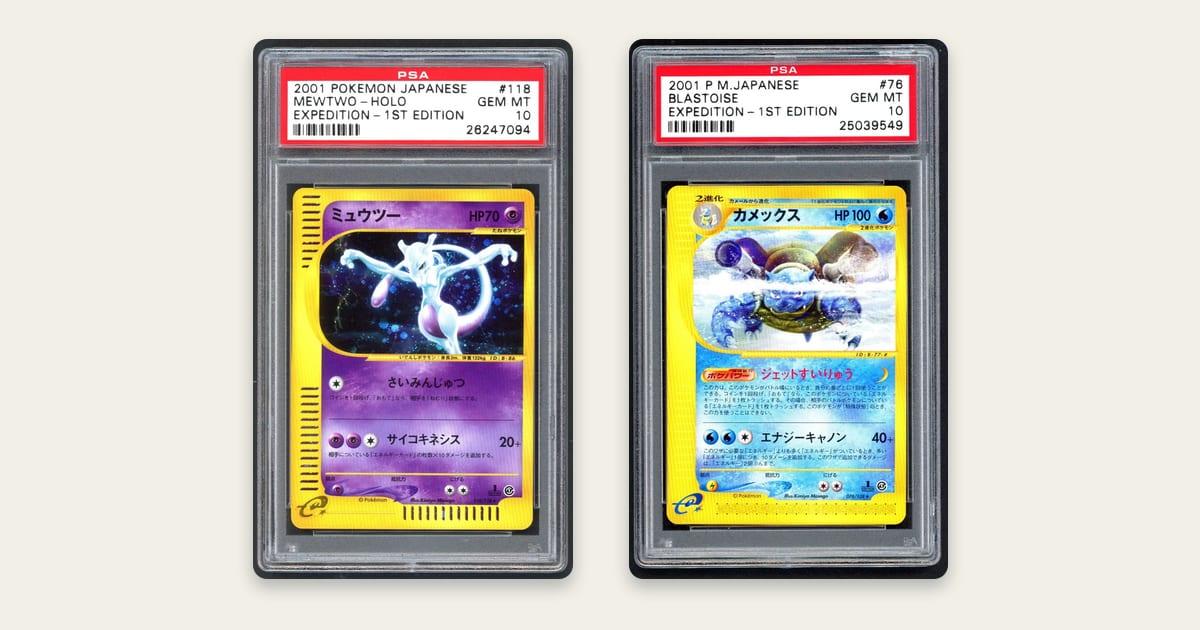
PSA pop, short for population, is the number of copies of a card that PSA has graded at each grade, from 1 to 10. It comes from PSA's Population Report, a running count of the cards PSA has graded, which PSA updates daily. When a listing says a Pokemon card has a PSA 10 pop of 486, PSA has graded it Gem Mint 10 on 486 occasions.
Pop affects price through scarcity, but only for cards people want. When few of the copies sent to PSA come back a 10, a PSA 10 sells at a big premium over a 9, and when most of them do, the premium shrinks. A low pop on a card nobody is hunting means very little. On PriceCharting's figures for 6 November 2026, a 1999 Base Set Rattata had only 84 PSA 10s and averaged about $140 in that grade, while the Charizard from the same set had 486 PSA 10s and averaged about $18,491.
What the PSA Population Report counts
PSA describes the report as a tally of every card it has ever graded and encapsulated, broken down by set, card and grade. For any Pokemon card PSA has graded, you can see how many copies sit at each grade from PSA 1 to PSA 10, and the total.
What it leaves out matters as much as what it counts.
- It covers only cards graded by PSA, not every copy in existence. Cards graded by CGC, Beckett or ACE are not in it, and CGC, for one, publishes its own population report.
- It leaves out the copies nobody has sent for grading, which is most of the worn ones. PSA itself points out that many lower quality cards never reach it at all, so the numbers can look weighted towards the top grades.
- It does not include cards PSA turned away, for example because they showed signs of alteration.
Pop terms you will see on Pokemon card listings
Pop 1 means PSA has graded only one copy of that card at that grade. Pop higher is the number graded above it, so a PSA 9 with none higher has no PSA 10 sitting above it. Low pop has no fixed meaning. It just means few copies at that grade, and it only tells you something when you know how often the card gets sent for grading at all.
To check a particular slab, type the certificate number from its label into PSA's cert verification. The result shows the card and grade PSA recorded against that number, along with the population at that grade and the number graded higher. Make sure the card in the slab matches the card PSA has on record.
How pop affects a Pokemon card's price
The table below sets PSA's counts beside average PSA 10 sold prices for four cards. The counts are PSA's, as PriceCharting held them on 6 November 2026, and the prices are PriceCharting's averages of completed sales on the same day, in US dollars. PriceCharting republishes PSA's counts rather than producing its own, so they can lag behind PSA's report. The Rattata and 1999 Charizard averages each rest on about one sale a month, so treat those two as a rough guide.
| Card | PSA 10s | Share of PSA copies graded 10 | PSA 10 average |
|---|---|---|---|
| 1999 Base Set Rattata | 84 | 46% | $140 |
| 1999 Base Set Charizard | 486 | 0.5% | $18,491 |
| 2023 151 Charizard ex SIR | 27,631 | 28% | $1,226 |
| 2021 Umbreon VMAX alt art | 20,819 | 70% | $3,450 |
Compare the top two rows first. The Rattata has a much smaller PSA 10 pop than the Charizard and sells for a tiny fraction of the price. Pop measures supply, and price needs demand as well. Far more collectors want a Base Set Charizard than a Base Set Rattata, however few Rattatas have been graded 10.
Then look at the share. Among the three cards collectors chase, the rarer a 10 is among the copies sent to PSA, the bigger the jump from a 9 to a 10. Fewer than one in 200 of PSA's 1999 Charizards are 10s, and a PSA 10 averaged about six times the $2,949 of a copy graded 9. With 28% of PSA's 151 Charizard ex copies at 10, a PSA 10 averaged about 3.6 times the $338 of a 9. With 70% of PSA's Umbreons at 10, a PSA 10 averaged less than twice the $1,952 of a 9. PriceCharting's grade 9 figures cover copies graded 9 by PSA or by Beckett.
That share is of the copies people chose to send in, not of every copy printed. Because lower quality copies often never reach PSA, a modern card can show a high share of 10s while plenty of worn copies sit ungraded in binders.
Why a low pop does not always mean a rare card
PSA's own pricing notes put the question directly. Is a card truly scarce, or is its population low only because few people have submitted it for grading? A card worth very little in any grade is rarely worth the fee to grade, so it can show a tiny pop without being hard to find. In one of PSA's own articles, a collector paid about $500 for a low pop Mint 9 that PSA reckoned was probably worth $10, for exactly that reason.
A pop is also a snapshot. PSA adds to it every day, and a modern card's pop can climb quickly while people are still opening packs and grading what they pull. On PriceCharting's records, PSA's count of graded 151 Charizard ex cards rose from 89,993 in February 2026 to 97,426 in May.
And a pop can overstate how many cards exist. It counts gradings, so a card taken out of its slab and sent back in, hoping for a higher grade, can be counted twice, once at each grade. A card moved to PSA from another grader adds to PSA's count and can stay in the other company's count too.
Selling a low pop slab
When only a handful of copies exist at a grade, sales are rare as well, so there may be no recent price to go on. The 1st Edition Base Set Charizard shows the extreme. On PriceCharting's figures, PSA had graded 5,383 copies and only 123 of them were 10s, and on 6 November PriceCharting recorded about two sales a year of a PSA 10. With so few sales, no average says much about what the next one will fetch.
That is why our guidance to consignors is that low pop slabs suit Buy It Now. A fixed price can wait in our eBay store for up to three months for the collector who needs that exact card in that exact grade, where an auction has to take whatever its ten days produce. A fresh grade of a card plenty of people want is different, because when several collectors chase the same card, the bidding sets the price and our 10 day auctions suit it better.
To price a low pop slab, look at what the same card has sold for one grade down and one grade up, and at how many copies sit above yours. A PSA 9 with none higher is a different proposition from a PSA 9 with hundreds of 10s above it, because a buyer who wants the highest PSA grade of that card has to buy a 9.
Before you grade a card for its pop
A low PSA 10 pop is tempting, but the pop says nothing about whether your copy will get a 10. Judge the card in front of you, then run the grading sums at the grade you realistically expect, not the one you hope for. The difference between PSA and CGC matters here too, because a PSA 10 has usually sold for more than a CGC Gem Mint 10 of the same card, but PSA has cost more and taken longer from the UK. If you do send a card off, pack it properly, because a dented corner on the way in costs more than the postage you saved.
PSA pop is one half of the price
Pop tells you how many copies PSA has graded at each grade, and it is worth checking before you buy, sell or grade a card. On its own it says nothing about demand, and demand is the other half of any price. We sell slabs from PSA, CGC, Beckett and ACE for our consignors, and you can see the kind of cards we list in our eBay store. If you hold a slab and are not sure what its pop means for its price, tell Lake Card Store the card, the grader and the grade, and we will come back with the route we would use to sell it.