
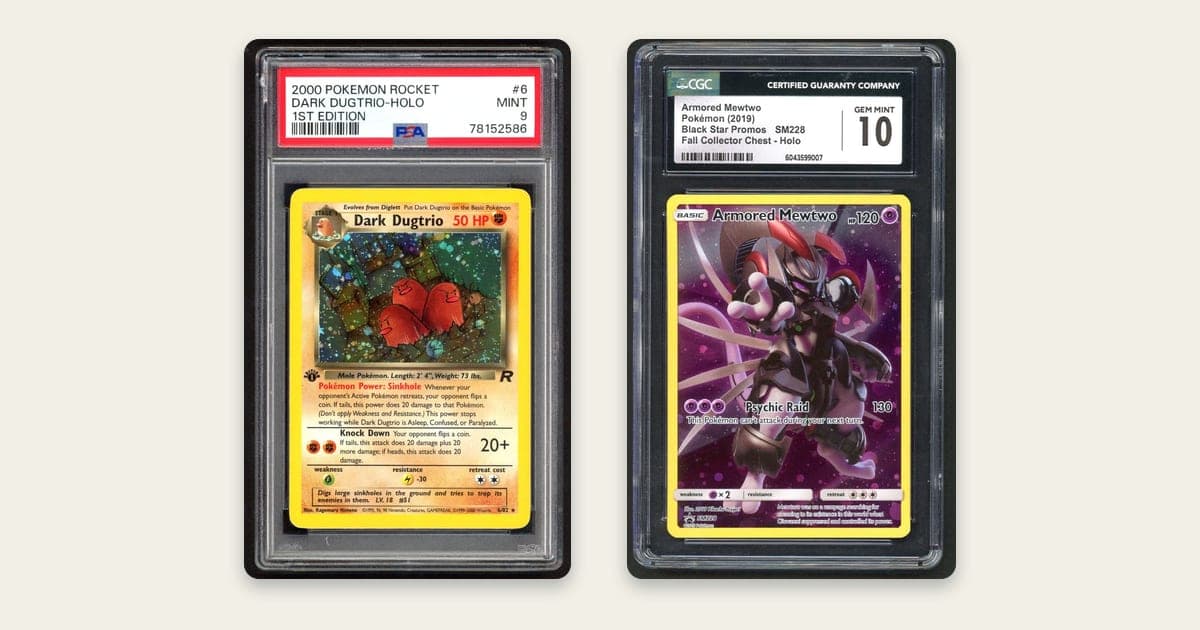
Not automatically. Age on its own does very little for a Pokemon card's price. What moves it is which card it is, which print run it came from, how rare it was to pull and, above everything else, the condition it is in today. Plenty of cards from 1999 are worth less than a bus fare, and plenty of cards printed in the last five years sell for hundreds of pounds.
Sold prices make the point quickly. On 9 October 2026, PriceCharting, which tracks completed sales and quotes them in US dollars, had an ungraded Rattata from the 1999 Base Set at about $1.75 and an ungraded Charizard from the same set at about $394. An ungraded Umbreon VMAX alternate art from 2021's Evolving Skies was about $1,867, nearly five times that Charizard. Meanwhile the 1st Edition print of the same Charizard was about $9,556 ungraded. An old card can be worth a fortune or almost nothing, and so can a new one.
Why age alone does not make a Pokemon card valuable
Every set, old or new, is mostly commons and uncommons, and those rarely sell for much on their own. A 1999 common is still a common. The Rattata and the Charizard above came out of the same packs in the same year, and one is worth more than two hundred times the other.
Condition then does the rest. Cards from the late 1990s were made to be played with, and many were, so condition varies enormously from one copy to the next. Even the unlimited Base Set Charizard that sells for about $394 ungraded averaged about $3,309 in a grade 9 slab on the same day. The card is the same. The condition is what the buyer is paying for.
What makes an old Pokemon card worth money
The first thing to look at is the print run. Wizards of the Coast published the English game from Base Set in January 1999 until 2003, and the first print of its main sets, from Base Set through to Neo Destiny, carries a 1st Edition stamp. It is a small black circle with the word Edition and a large number 1, on the left just below the artwork. Base Set 2 never had one. As the Charizard prices show, the stamp alone can multiply a card's value many times over.
Early Base Set cards also lack the drop shadow that runs down the right-hand edge of the artwork box on later prints. Collectors call the unstamped ones shadowless, and they are priced separately from the unlimited print that followed, for the same reason 1st Edition cards are. There are fewer of them.
Next is rarity. Early sets mark it in the bottom right corner of the card, with a circle for a common, a diamond for an uncommon and a star for a rare. The Base Set Charizard is a holographic rare, one of the shiny-artwork cards that sit at the top of each early set, and the Rattata is a common.
Finally, and most of all, condition. Look at the corners for wear, the edges for white flecks where the blue or yellow border has chipped, the holo surface for scratches, and the card as a whole for creases and bends. A crease takes a valuable card a long way down.
Sealed product is its own category. An unopened vintage booster pack sells as a sealed pack, and opening it to see what is inside turns it into a handful of single cards.
What makes a new Pokemon card worth money
Modern sets have their own chase cards at the top of the rarity ladder, the alternate arts and special illustration rares that show the Pokemon in a full painted scene. They are where the high prices in a modern set sit. The Charizard ex Special Illustration Rare from 2023's 151 set averaged about $336 ungraded on the same day, and the Umbreon above was close to $1,867.
The difference from vintage is that a new card is expected to be perfect. It came out of a pack in the last few years, so a buyer will compare yours with copies that have barely been handled, and small flaws show up in the price.
Do you take old and new Pokemon cards?
Yes. We consign Pokemon and other trading cards of every era, from single cards worth a few pounds to graded slabs worth thousands, and sealed product too. The cards and packs on our home page come from our own eBay listings, and between them they span nearly twenty-five years of the game, from a sealed 1st Edition Team Rocket booster pack and a 1999 Base Set Ivysaur in a PSA 9 slab, through a 2002 Legendary Collection reverse foil Charizard in a PSA 10, to a Charizard ex Special Illustration Rare from 2023's 151 set graded Gem Mint 10.
What changes from card to card is the best way to sell it. Our 10 day auctions suit chase cards, hyped sets, fresh grades and anything without clear recent sales, because the bidding finds the price. Buy It Now suits low population slabs, niche promos, sealed product and higher end cards with a solid sales history, where it is worth waiting for the right collector.
Low value cards are the one place to be careful. Sales under £50 carry a £3 handling fee per item, so a single common is not worth consigning on its own. A lot listing is treated as one item and priced on the lot's total, though, so a stack of old commons sold together still can be. If you are weighing consignment against the other options, our guide to where to sell Pokemon cards in the UK sets them side by side.
How to check what your old Pokemon cards are worth
Start by working out exactly what you have. Find the card number in the bottom corner, look for a 1st Edition stamp on the left under the artwork, and if it is from Base Set, check the edge of the artwork box for a shadow. Base Set cards carry no set symbol at all, which is one way to tell them apart from the sets that followed.
Then look at what copies have actually sold for, not what sellers are asking. eBay's own help explains how to check completed listings, which show what items like yours have sold for. PriceCharting gathers sold prices by grade, which is useful for seeing how much condition is worth on a particular card, as long as you remember its figures are in US dollars and UK prices can differ.
Be honest about condition when you compare. A raw card with soft corners and a scratched holo is not the same card as the near mint copies at the top of the sold listings, and pricing it as if it were is how good cards end up sitting unsold.
Old and new cards both have value
Age is a starting point for the question, not the answer. A 1999 common is worth very little, a 1999 Charizard in good condition is worth a great deal, and a modern chase card in perfect condition can be worth more than either. If you have found an old collection, or you have modern cards worth selling properly, tell Lake Card Store what you have and we will come back with the route that suits each card.